
Glass Railings & Specialty Projects
Introduction
Glass railings and specialty glass projects bring modern design, uninterrupted views, and a sense of openness to residential and commercial properties. At RGI Romo Glass Installation Inc., we design, fabricate coordination, and install glass railings, balustrades, and specialty assemblies in Oceanside, CA—balancing code compliance, structural safety, coastal durability, and visual impact.
Why glass railings matter
Glass railings maintain views and allow light to pass through uninterrupted while providing the necessary fall protection for stairs, balconies, and decks. When correctly engineered and installed, glass balustrades create a contemporary look without compromising safety or durability. Coastal installations demand attention to corrosive environments and wind loads; these factors inform hardware choices and installation methods.
Key benefits of professional glass railing installation
Uninterrupted sightlines
Glass preserves views while providing safety.
Strong and code-compliant
We engineer systems to meet local load requirements and guardrail heights.
Low visual clutter
Frameless or minimal hardware systems reduce visual obstruction.
Adaptable design
Suitable for interior staircases, balconies, exterior decks, pool fencing, and commercial applications.
How we deliver glass railing and specialty projects
Site evaluation and engineering
- We assess the structural substrate and load-bearing capacity.
- We consider wind loads, use patterns, and local building codes that dictate guardrail heights and load capacities.
Fabrication and hardware selection
- We coordinate with fabricators to cut and polish glass, provide drilled holes for patch fittings if needed, and deliver units that meet engineered specifications.
- We select hardware rated for external exposure with appropriate finishes to prevent premature corrosion.

Design and material selection
- For Oceanside’s coastal environment, we typically recommend stainless steel or marine-grade aluminum for channels and hardware.
- Glass thickness depends on span and mounting system—commonly 3/8” to 1/2” tempered or laminated glass for higher safety and sound control.
Professional installation and testing
- Our installers anchor channels or fittings to structural substrates and secure panels using setting blocks, gaskets, and grout or sealants where applicable.
- We perform final inspections and load checks where required to verify compliance and ensure performance.
Specialty projects beyond railings
- Glass canopies and awnings: Provide weather protection with careful structural engineering and corrosion resistant materials.
- Glass feature walls and structural partitions: Specialty installations that require coordination with structural engineers for load transfer and anchorage.
- Storefront and entrance systems for unique storefront geometry or historic building retrofits.
Types of glass railing systems
Channel-mounted systems (base shoe): Glass panels sit in an aluminum or stainless steel channel anchored to the deck or stair substrate. This approach offers a clean aesthetic with minimal visible hardware.
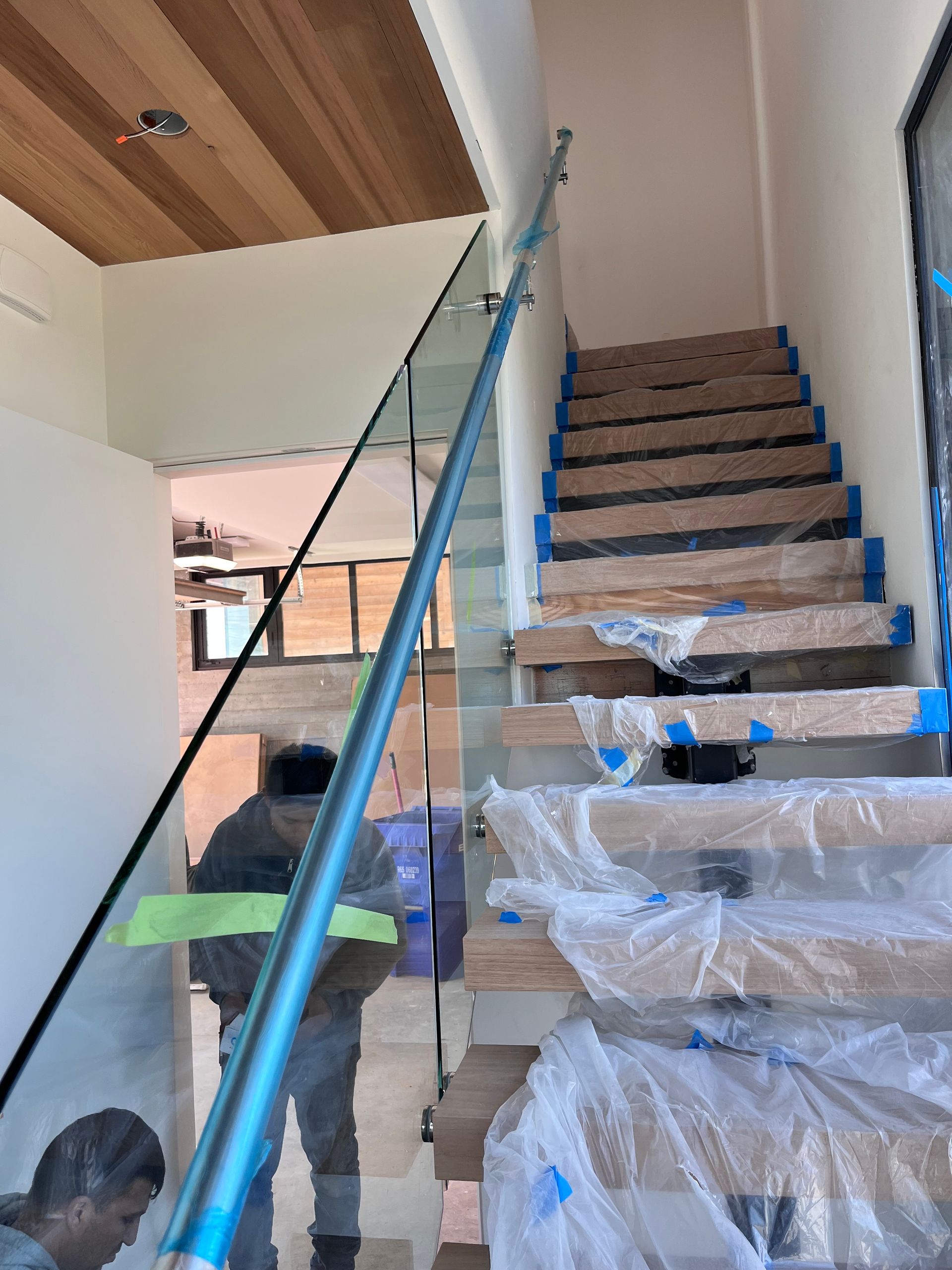
Patch-fitted systems: Panels are fitted into point-fixings or base clamps, ideal for frameless looks with visible stainless-steel fittings.
Top-rail systems: Combine glass panels with continuous top rails for additional stiffness and design variation.
Post-mounted systems: Glass mounted between vertical posts (often a hybrid approach) provides strong anchorage and can be cost-effective for longer runs.
Coastal and maintenance considerations
Oceanside’s marine environment increases the importance of stainless steel fittings and proper sealants. Regular maintenance—flushing salt deposits from metal fittings and periodic inspections—helps extend the life of the railing system.
Frequently Asked Questions (FAQs)
Q: Are glass railings safe?
A: Yes. When designed and installed to code, tempered or laminated glass railings are safe and reliable. We design according to local requirements for guardrail height and load, and we recommend laminated glass in areas where additional impact resistance is desired.
Q: Can glass railings be installed on an existing deck?
A: Many existing decks can be retrofitted, but we assess the substrate and connection points to ensure safe anchorage. Reinforcements may be required for older structures.
Q: Which hardware is best for coastal areas?
A: Marine-grade stainless steel (316) and specially coated aluminum prevent corrosion and extend the life of the installation. We recommend these materials for exterior applications near the ocean.
Q: How do you maintain a glass railing system?
A: Regularly rinse fittings and glass with freshwater to reduce salt buildup. Clean glass with non-abrasive cleaners and inspect connections annually for signs of corrosion or loosening.
Contact and next steps
To discuss a glass railing or specialty glass project for your residential or commercial property in Oceanside, call RGI Romo Glass Installation Inc. at (760) 295-0031. We’ll schedule a site visit, evaluate options, and provide an engineered, written proposal.
Address: 4747 Oceanside Boulevard, Oceanside, CA 92056